Sunday, May 15, 2011

Let Go of Reason to Write Better? Could Be...


Photo snagged by Denny S. Bryce from an Internet blog.

Emotions are circumstances that task the heart as well as the mind. They help us tell a tale of extremes: extreme love, extreme hate, extreme pain, anguish and joy, guilt and sorrow, and fun and laughter. Those are the ingredients of good drama.

For some writers--like me--those emotions aren't easy for my characters. But good news! I am finally coming to grips with why my characters must show emotions in circumstances (scenes) that matter. I had this latest revelation during revisions of my 86,000 word manuscript.

Putting my characters in the front a speeding train has never been easy. It takes constant thought and concentration and I admire those who are make it so readily a integral part of their story telling.

In my non-writing life, I spend my time putting chaos in order, crafting the crazy into a seamless organized performance. So messing up a life (or ten:) is tough, nose to the grindstone, work. We've all heard that putting your characters in bad situations is hard. For me, I'm breaking a routine, a habit I've spent  twenty-five years perfecting.

Now, I must let go of rationale thought and seek out angst and grief, love and pain, laughter and tears. I now know that it's not just about creating a believable bad guy (which I've always found an easier task) it's about creating conflict and emotions throughout a story, from scene to scene, paragraph to paragraph, and each word has to matter. I want the reader to stare at the pages I wrote and say: wow, that's intense.

So you see, that's what I learned during my latest revision -- I can let go of reason.

And my characters are going to go through hell from here on out because of it.

How sweet is that?

Tuesday, May 3, 2011

Girl Crush - It's Just That She Won Be Over!

Pulled from the Internet by Denny S. Bryce


After two and a half days in the middle of the forest (okay, I was in Virginia a few miles outside of DC at the WRW Retreat, but I saw a rabbit which means forest and/or woods to my city girl behind)...

Oh, what was I talking about? Well, I was explaining how I developed a girl crush on a literary agent, and not because she agreed to be my agent. Nope that wasn't it. She delivered one of the smartest workshops on marketing for authors I've heard in a while. Before I deliver the goods on this wunderkind, let me explain in more detail. I was at the WRW Retreat - it's the Washington, DC chapter of the RWA (Romance Writers of America). It was amazing, and the authors and agents and editors were down to earth and you know how these things can go - if they are right - they are glorious. So, good times were had by one and all...but before I scooted away Sunday morning (anxious to return home to my big screen desktop to write and write and write) I decided to attend one last workshop...honestly, I was so stressed out I only attended one workshop:). But this one was golden.

The presenter was Sara Megibow, an agent at the Nelson Literary Agency.  From my 25 years in the marketing and PR business can I just say wow. She knows the deal with what's up for authors in today's highly competitive Internet rules arena for marketing your business. And ladies (and gents) this world of art and beauty and everything surreal -- called writing -- translates into needing to know a hell of a lot about marketing.

What did Sara say? I can't repeat verbatim - my memory has been selective since 2003 - but the heart of her comments centered on the critical importance of establishing a web presence for your brand - which means the Internet needs to get to know you (authors!), whether you've been published or are multi-published. It's an added feather, marketing factoid, branding thumbs-up that you need to make happen.

Sara's advice was to visit her agency's website and take a look at its client lists' web presence. It's good. It's damn good. Then she said make certain you - pre-published gal and/or guy - have a website, Facebook page and a Twitter account. And no more I am intimated by Twitter. Take a few minutes a day, and pretend you are one of your characters, and blog and or Tweet in their voice (but let the world know who is behind all of this brilliance) - be your brand, be a marketing diva. When that brilliant book is finished and a publisher finally sees the light and makes the call - you want to be ready to sell the hell of that book.

Am I right? Hell, yes, me and my girl crush know the deal - exactly.

Saturday, April 23, 2011

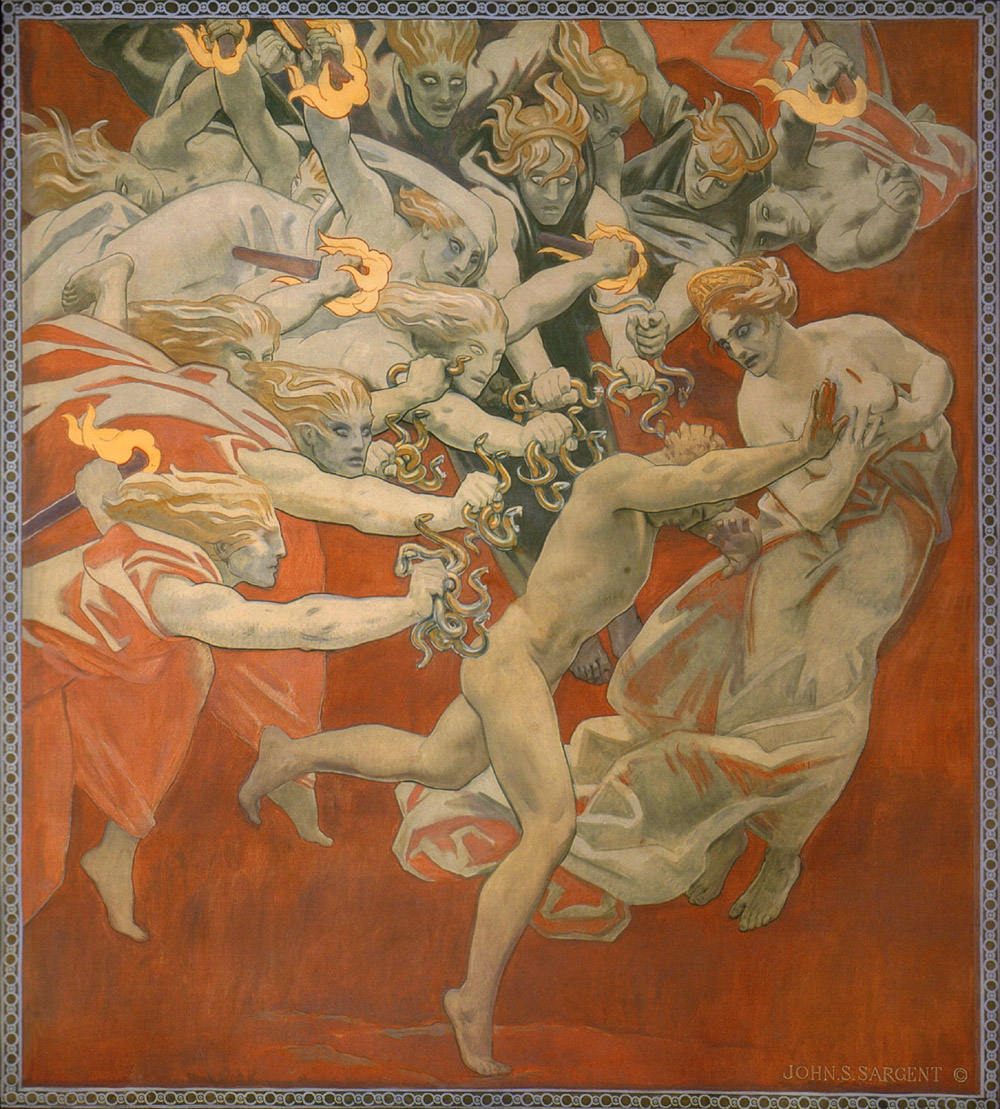
Guilt, the Furies and Me

Orestes and the Furies, a photo snagged by Denny S. Bryce

I am feeling guilty today about a whole mess of things (my lack of regular blog entries only one of the items on the list). But since writing is the most glaring in my mind, I decided to blog about writer's guilt. Which I thought for sure would have its own special page on Wikipedia, but no, there's just the normal fare.

Guilt - a cognitive emotional experience when a person believes - either rightly or wrongly - that they have violated a moral standard and bears significant responsibility for that violation.

Sounds pretty high and mighty, the stuff of great big, fat books, with long words and pages with crumbled brown edges. You know, original manuscripts of old, written by the likes of Shakespeare or ancient Greeks with names such as Euripides. And yes, I know there are a a bunch of romance writers who can give the Greeks a run for their money when it comes to creating complicated guilt-ridden characters and plots driven by a character's issues. But this is about me...

On that same page of Wikipedia is an image of Orestes, pursued by the Furies, tormenting him about his guilt over killing his mother.

Having not killed anyone - at least not me personally, perhaps a character or two has committed such an act, but again, I'm feeling guilty about not writing enough lately. Too busy with the JOB and other sundries to keep my eye on the prize - that prize by the way is finishing a manuscript to my satisfaction - not for anyone else at this stage - just moi.

So the point of today's blog - are their furies chasing you around the room, casting their evil thoughts on your guilt-ridden writer's mind? Do they look like procrastination, muse gone bad, impatience, poor time management skills, or too many episodes of mediocre TV?

I wonder if I can use one of my furies to help me add more conflict to my manuscript? For example, if my main character is suffering from survivor's guilt, and the sound of her own laughter makes her stomach ache, what if her new partner cracks her up with his wry sense of humor? Is that conflict? How do I work it into a scene where they do more than argue? Mmmm...am I on to something here, or just dealing with another fury? The demon named wishful thinking?

Sunday, March 27, 2011

Getting to the Heart of Your Villain


Photo snagged by Denny S. Bryce

I love villains, and even find them easier to write some days, especially after a hard week of work...but I read in one of my many craft courses, or in a book, that in order to create a really good bad guy or gal - keep in mind that the evil one, doesn't think of themselves as being bad. And they have as big a journey as the hero or heroine. A favorite quote of mine from Whedonverse was made by Anya who said "Evil things have plans, too." (or something like that:). 

So dig into your bad guy's head/backstory--what motivates him? Give him a vulnerability. A 'wound' so deep that even at his (or her) most badassedness there's something sympathetic you know about the bad guy. His motivation can help make him more terrifying and/or dangerous to your hero or heroine. Also, play with contrast. Let's say your main character has a 'wound' from his past that is central to him or her being the hero they are, or become in your story...for example...

On the TV show "Criminal Minds" one of the smartest, most vigilant special agents is Aaron Hotchner (this is a favorite show of mine, except for once I'm not talking about Shemar Moore:).

A few seasons back Special Agent Hotchner was interrogating a vicious serial killer. As two cops led the confessed murderer away, the guy asked Hotch, 'How did you know about my father? I never told anyone." Hotchner's reply went something like, "Some kids who are brutalized by their fathers turn into serial killers, others turn into people who hunt and find those killers." (Definitely paraphrasing here...). But that character reveal was well-executed IMHO. Throughout the episode, that bad guy was toted as the most brutal ever, having killed more than 100 people over the years - a real monster. But why it sticks in my mind is the connection the writer established between two opposing characters and how well it emphasized good versus evil. It gave the scene more weight than the typical we caught the bad guy ending. And I imagine for the writer of that episode - made it easier to write because in the back of his mind, he was working toward a goal: to deliver that line.

Anyway, it's Sunday morning and I've had a big cup of coffee...but I must credit a question from a member of my Savvy Authors critique group, which led me to this subject. So after brainstorming there, I decided to re-edit my response to her question and re-post it here. 

The topic is definitely one I often debate as I work on my manuscripts.

So tell me, what inspires you when writing/creating your bad ass bad guy?

Sunday, March 6, 2011

Marketing for Writers - Social Media for NonPublished Authors - Why Bother?

Snagged from the Internet by Denny S. Bryce

I just got back (no, that was yesterday afternoon, I'm just up so damn early on a Sunday) from a monthly meeting of my local RWA chapter where there was a brief discussion regarding publicity and what writers can expect from publishers these days as far as support for marketing their book. There were also a few comments made about the effects of social media on book sales.

Before I dive into this - let me say it was a great meeting with a fabulous panel of authors from the sci-fi, paranormal and the futuristic world of writing. It was great to hear their stories about the ups and downs of their careers, what has worked for them and what hasn't worked, but thankfully, a lot of what they did worked. So it made for an uplifting panel discussion. Well done WRW! For a list of the authors, please visit the WRW website. Whoops they've updated the site - so here are the authors on yesterday's panel: Catherine Asaro, Mindy Klasky, Pamela Palmer, Diana Peterfreund, and Rebecca York. Please go check out their websites!

OMG! I almost left out the star of the day! Author Colleen Gleason. She taught two workshops in the afternoon one on world building and the other on the Hero's Journey for Writers. Good stuff!

But as I pointed out - during this meeting there was a short conversation about marketing and the value of social media. My take away was pretty much - wow, really. I'll explain that more in a moment, but does anyone out there have any research on social media and its impact on author sales, or what impact social media has on an author's visibility in the marketplace? Is there a marketplace for writers you can count on to deliver sales?

Some of what I'm about to write here is pure speculation based on my expertise as a marketer of consumer products and special events. It also is based on my observations over the past few years of what seems to be working for authors and what doesn't work (to me) for authors and writers.

If you are published, social media alone won't sell your book. It can support a marketing plan, but it better not be the only apple in your barrel. In today's marketplace, you need a website (which is NOT social media). Your website is the address of your business, your touchstone with customers - your readers, fans and the industry in general, and if you are published and you don't have an effective website - stop reading now. You and/or your publisher just don't understand the world in which we live.

If you aren't published, not having a website is not a bad thing. But if you're a serious writer - you want to start developing your online identity sooner than later. It's an opportunity to showcase your personality - not as a means to promote your yet-to-be-published (or sold) book, but to let people get to know the public you. The aspects of your personality you are comfortable sharing with a broad audience, some of whom, once you do get published will buy your book because you've encouraged them to get to know you. And if you've written the best possible book you can write, you have a better than average chance of selling that book to the 'friends' you've made through social media outlets such as Facebook, Twitter, MySpace or any of the rest.

I do have a website and you can find it at http://www.dennysbryce.com. But as an unpublished author I focus on Twitter, Facebook and my blog (don't laugh about my once-a-month blogs because it will be the subject of my next blog, okay).

This next statement is not based totally on what I heard yesterday, it's been out there for a while.  I believe a lot of established authors have had it up to 'there' with their publishers' lack of marketing support. The attitude I am hearing is: "I wrote it, and now they want me to sell it, too?!!!"

Sorry, but it's that way it is these days in all aspects of business, especially for entrepreneurs and as authors, you are an entrepreneur - just ask your tax guy or gal.

As an entrepreneur, your goal is to identify the most effective way to incorporate marketing into your business routine. That means as part of the time you allocate to writing.

To get started, I always say ask questions. Do research. Talk to published authors who have embraced their role in marketing their own product. Talk to agents - ask them how much it matters if a new client is savvy about social media, marketing, or open to diving into the fray.  Don't be shy. We all know that authors love to talk about writing, they also enjoy talking about selling books, too. Where can you find these folks to ask them questions? Join RWA and then join your local chapter. Go to meetings, or visit online blogs (like this one:), and ask questions.

Finally, don't be intimidated by technology. If you own a computer, you should be able to figure out how to Tweet, or how to set-up a free blog account.

It doesn't take as long as you think to become a pro.

Have a great Sunday!

Friday, February 11, 2011

Marketing for Writers: A Website and Personality

Besides working on the WIP:)...I am a marketer. I've been in the business for a few decades and for the past few years (six), I've been transitioning from full-time marketer to writer. And since I'm still unpublished, although moving in the right direction, I'm still marketing.

So I decided to start blogging about marketing for authors/writers.

Today's marketing tip is basic and very Marketing 101. We know Social Media is about building community. To create community is more about establishing a persona or brand or a consistent image for you - the writer - on the Internet. But a first step for a published or unpublished writer is research.

Let's start with websites. And don't look at mine (lol), not yet, but that's part of this journey, we're going to see my transition from a marketer to marketing my own brand.

I love research - it is the window to the world, or at least finding a rationale reason to do something, say something, or to figuring out what will work best for building/creating your brand.

First for the website is design: What appeals to you? What attracts your attention? When you visit other sites, where do you linger and why, and where do you find yourself returning to more and more often?

Below are five author sites I really like. Why? Design or layout and navigation - how easy is it to get around and Personality...what sense I get of the writer as a person, and their work.

Let's not worry about price, okay? Look for what you like. Study it for a few minutes and figure out why. Also, write down what you don't like...

More to come...on websites...

Rebecca Walker
Alison Kent
Dawn Atkins
Heidi Betts
Kathleen Gilles Seidel

Sunday, January 23, 2011

Some Obsessive Mumbo Jumbo and Insights courtesy of Fringe...


Joshua Jackson aka Fringe's Peter Bishop, photo snagged from Internet by Denny S. Bryce

Let’s talk about the psychology of obsession. Not in a clinical sense, or the "I need more medication to control my desires to repeat, repeat, repeat a small chore to the point of nausea." Although a true obsessive compulsive might find this scenario orgasmic. 

I want to chat about obsession as it applies to writing. Can an obsession make for good story telling? As writers, can we use our natural predisposition to obsess (write, rewrite, write, rewrite), as a guide to the stories we want to write and enjoy reading and/or watching?

Ah! The hypothesis – how convoluted was that?

Well, it’s what’s on my mind this lovely, freezing Sunday afternoon as I work on my application (the mystery application will be disclosed soon enough). Recently, I added a new TV show to my list, and it got my brain racing as to why I do this, repeatedly, and how it comes into play with the way I plot the stories I write and what’s important to me when I read a book or watch TV (or see a movie - The Fighter? brilliant).

A quickie on my television obsessions  - the usual: Buffy the Vampire Slayer and Angel (thank you Joss Whedon).  Then Moonlight (too pretty not to love) and Farscape, which still occupies a very special place in my brain. And now, FringeWhat makes Fringe unique, besides great acting, stories, and it's appreciation of classic sci-fi, is that the male lead, Joshua Jackson, although a handsome man (okay, damn handsome), is not the hottie that usually drives me. I'm a Spike, Angel, Mick St. John or John Creighton kind of gal, you know the type.

But Fringe is about characters, their relationships, emotions and choices - and so far, every episode in its two and a half years carries threw on that promise.

My stories, even if I say so myselfJ, have complicated plots and I do play around with notion of 'high concept' story telling. But no matter how intriguing or off the wall, a plot does not a story make. Characters and relationships and emotions are at the soul of a good story – and whatever medium is used to deliver the tale – books, plays, screenplays, lyrics – it’s the writer’s responsibility to get that aspect of the story right, their obsession to reach that goal makes the difference.

I love puzzles. Pieces falling together that create the big picture.  My stories tend to go about putting the pieces of a puzzle together. But in that puzzle, I'm sometimes challenged with the characterizations and how my main character functions as a puzzle piece or the owner of the big picture. Then where does the emotion come from? That's what I need to be obsessing about, you know?

What obsession drives your story telling?

ShareThis

LinkWithin

Blog Widget by LinkWithin
Powered By Blogger